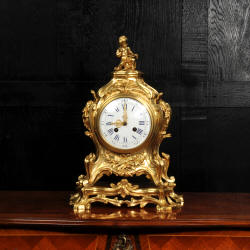
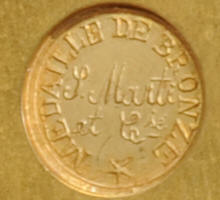
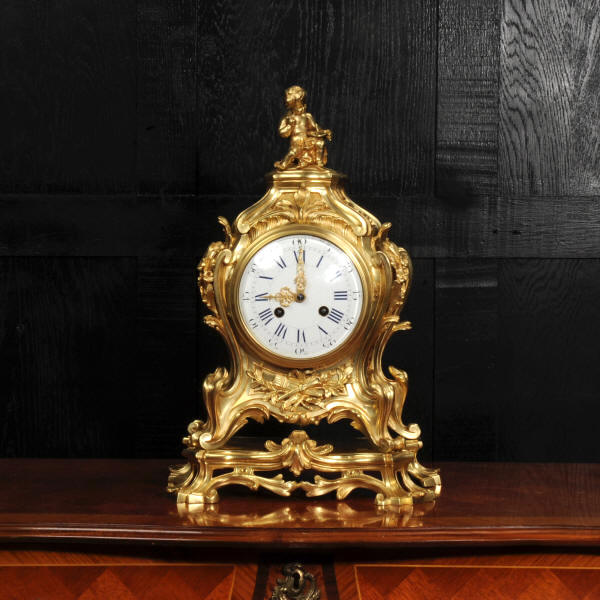
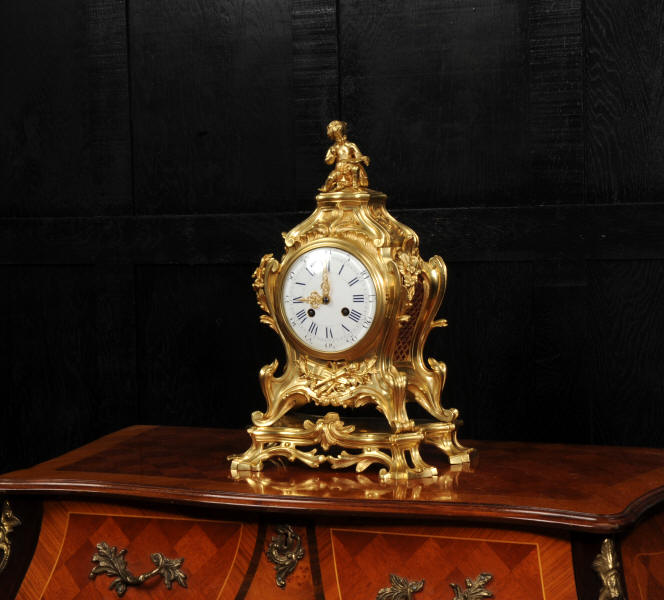
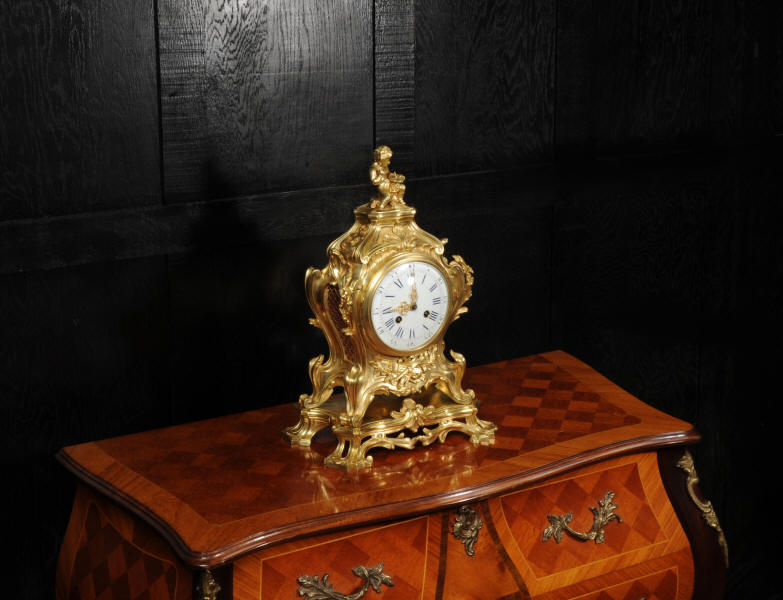
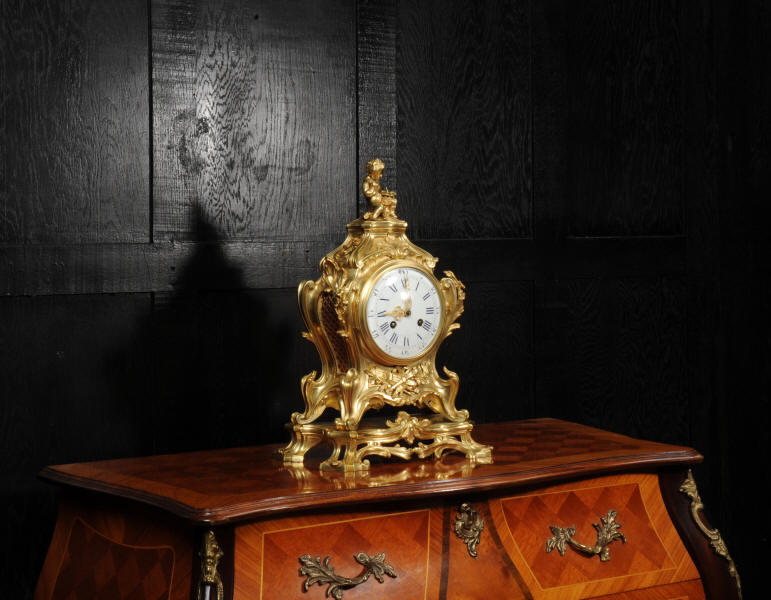
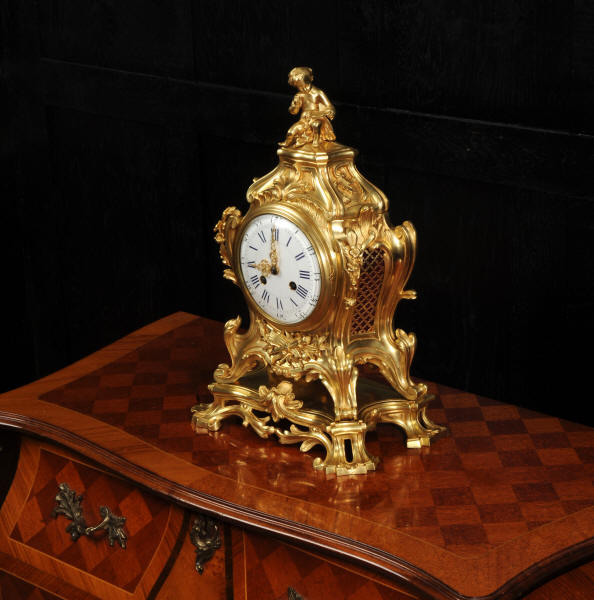
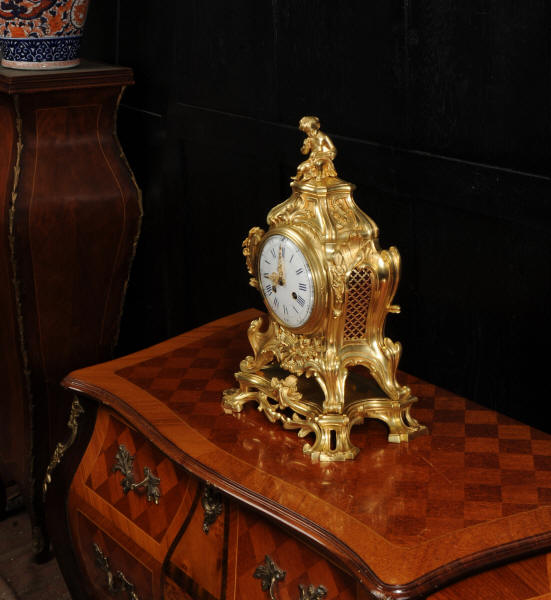
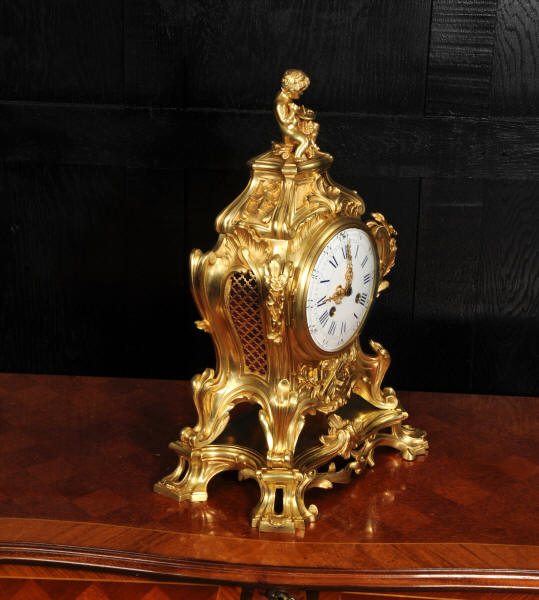
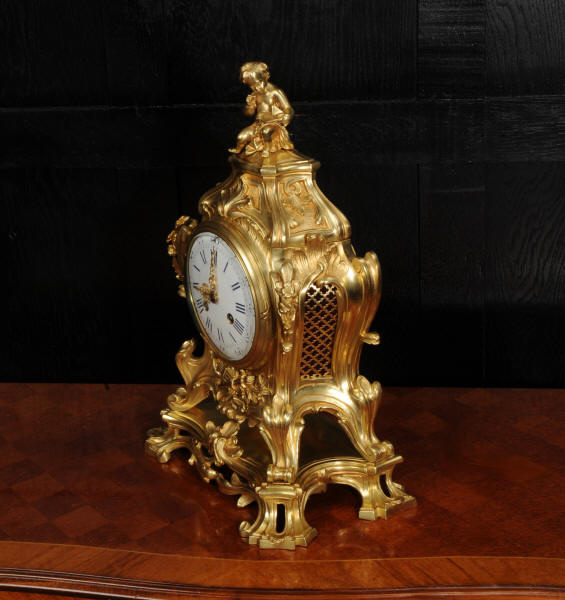
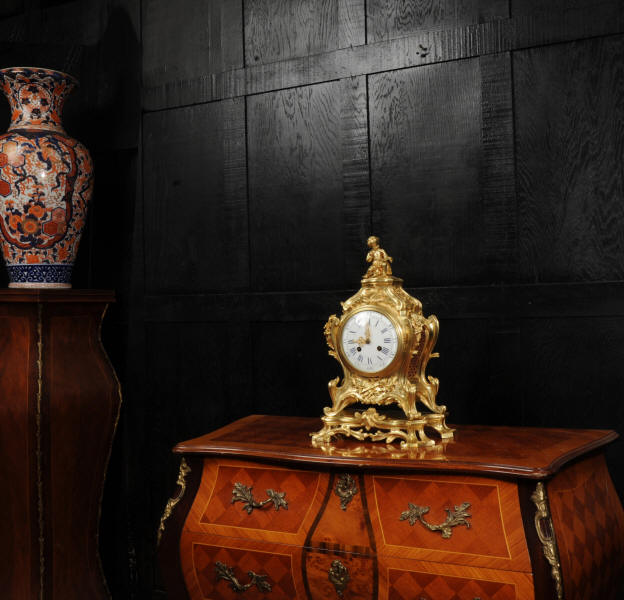
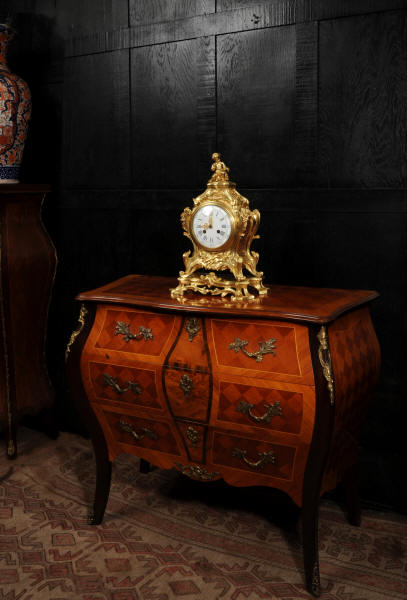
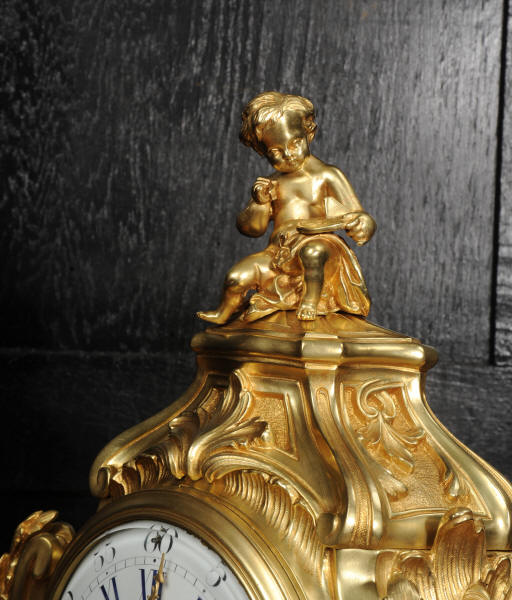
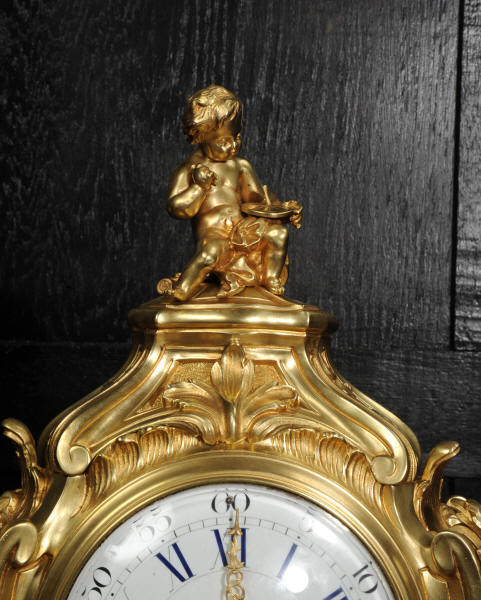
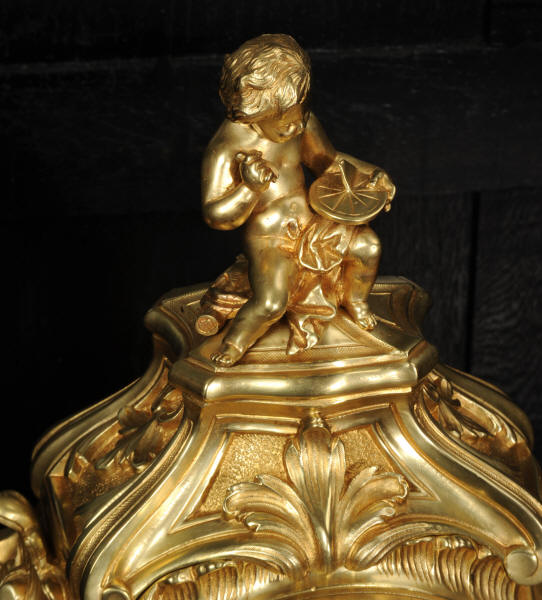
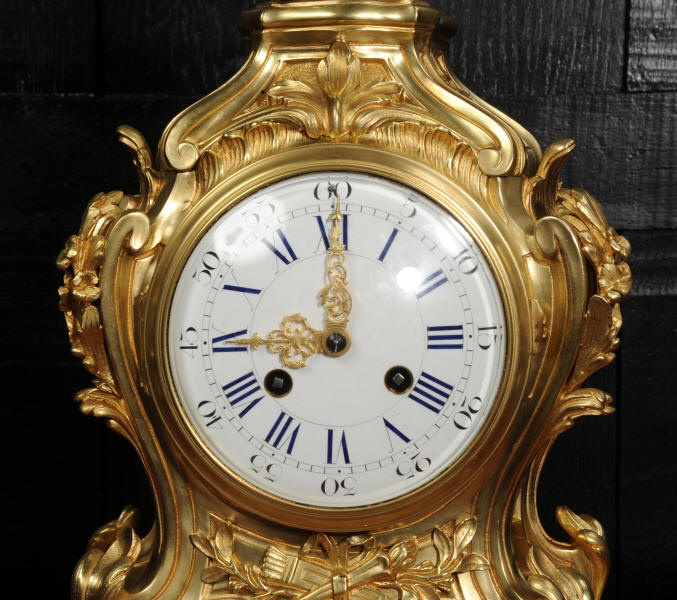
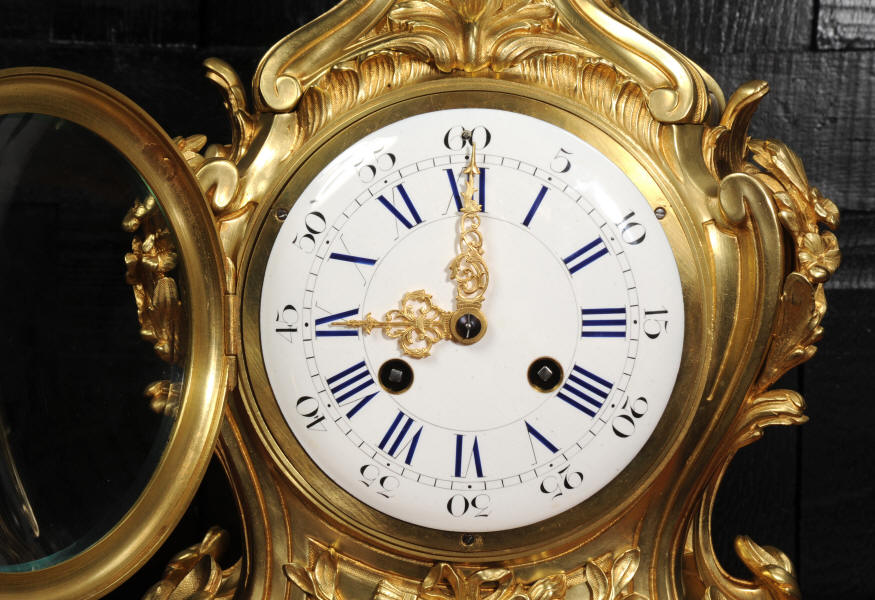
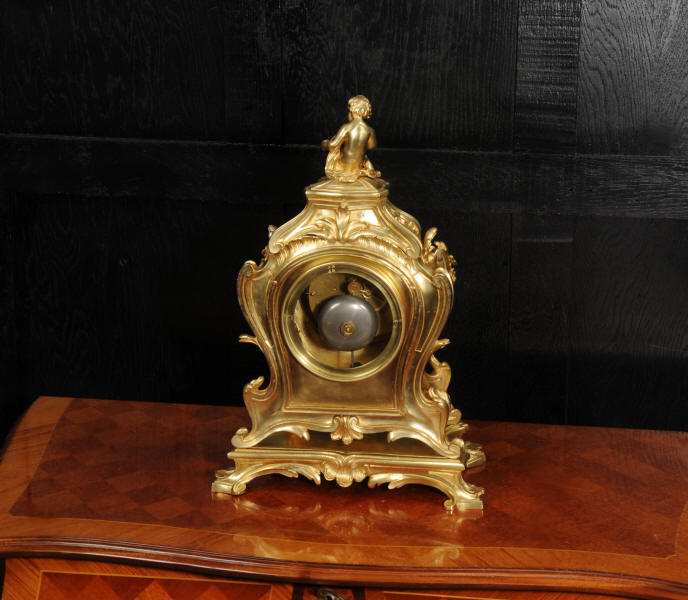
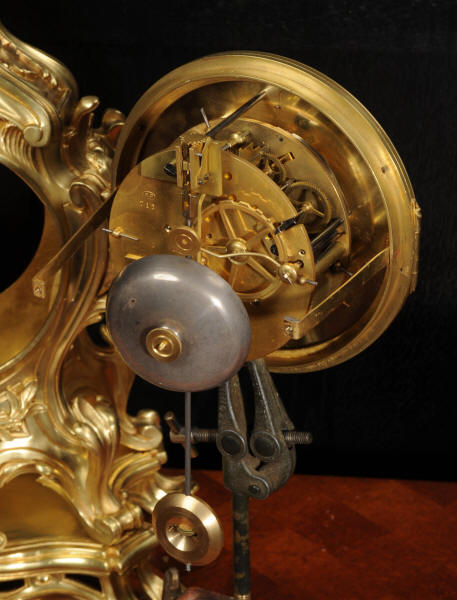
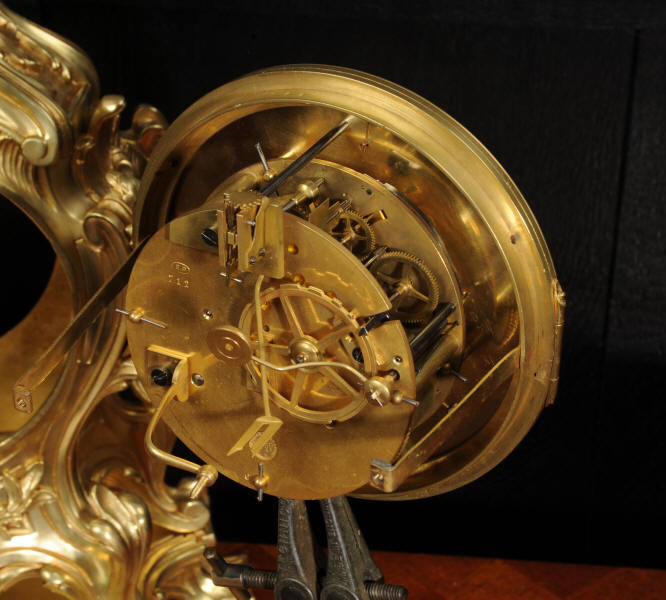
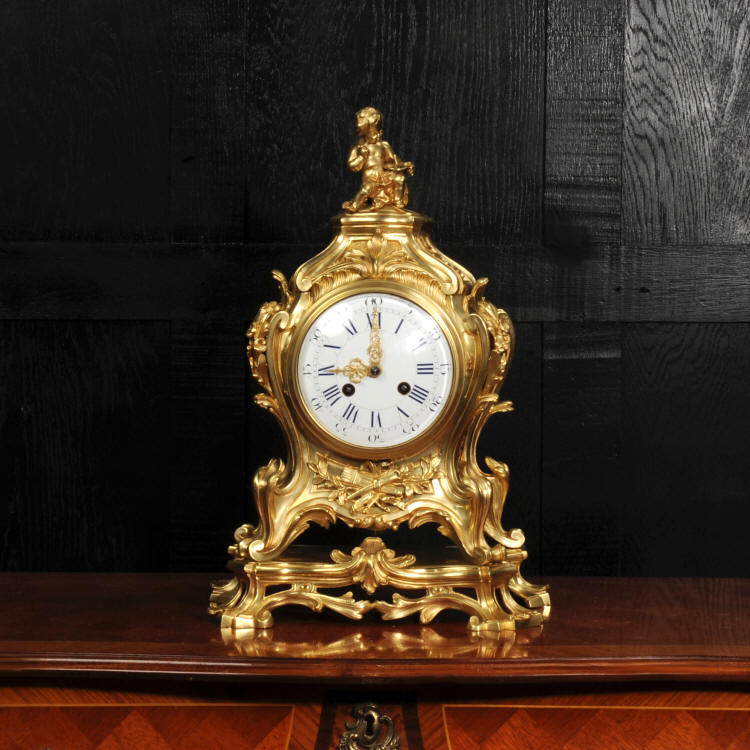
The dial is of porcelain enamel on copper, retaining its original finely pierced gilt-bronze hands and set beneath a convex glass bezel. Beneath the dial, the allegorical symbolism continues with Amor’s quiver of arrows and flaming torch, emblematic of love and enlightenment, nestled among richly cast foliate scrolls and finely chased ornamentation. The sides are mounted with fabric-backed sound frets, lending visual lightness to the design. The polished base subtly reflects the movement of the pendulum, which may be seen gently swinging within the case. A glazed rear door reveals the beautifully finished movement. The case is modelled in the round, making this clock particularly well-suited for display in the centre of a room or on a table. The clock houses a high-quality French movement by Samuel Marti, and is of superb quality. The movement is presented in excellent condition, having been fully overhauled by our specialist clockmaker, and is in perfect working order. It features an eight-day duration, striking the hours and half-hours on a bell with a clear, resonant tone. The pendulum is a sympathetic replacement. Click the video clip to hear the bell and watch the clock running. Condition of the case is excellent, the original gilding is beautifully clean and bright with slight wear and discolouration. There are a couple of small casting faults, including one to the cherubs torso. The dial is also in excellent condition with damage. A comparable model is illustrated in Hans Ottomeyer and Peter Pröschel's, Vergoldete Bronzen: Die Bronzearbeiten des Spätbarock und Klassizismus, Munich, 1986 and also in Giacomo and Aurélie Wannenes', Les plus belles pendules françaises: De Louis XIV à l'Empire, Wannenes Art Publications. Robert Osmond - Bronzier (1711 - 1789). French bronzier Robert Osmond was born in Canisy, near Saint-Lô; he began his apprenticeship in the workshop of Louis Regnard, maître fondeur en terre et en sable, and became a master bronzier in Paris in 1746. He is recorded as working in the rue des Canettes in the St. Sulpice parish, moving to the rue de Mâcon in 1761. Robert Osmond became a juré, thus gaining a certain degree of protection of his creative rights. In 1753, he sent for his nephew in Normandy, and in 1761, the workshop, which by that time had grown considerably, moved to the rue de Macon. The nephew, Jean-Baptiste Osmond (1742-after 1790) became a master in 1764 and as of that date worked closely with his uncle, to such a degree that it is difficult to differentiate between the contributions of each. Robert appears to have retired around 1775. Jean-Baptiste, who remained in charge of the workshop after the retirement of his uncle, encountered difficulties and went bankrupt in 1784. Robert Osmond died in 1789. Prolific bronze casters and chasers, the Osmonds worked with equal success in both the Louis XV and the Neo-classical styles. Prized by connoisseurs of the period, their work was distributed by clockmakers and marchands-merciers. Specialising at first in the rocaille style, in the early 1760’s they turned to the new Neo-classical style and soon numbered among its greatest practitioners. They furnished cases to the best clockmakers of the period.
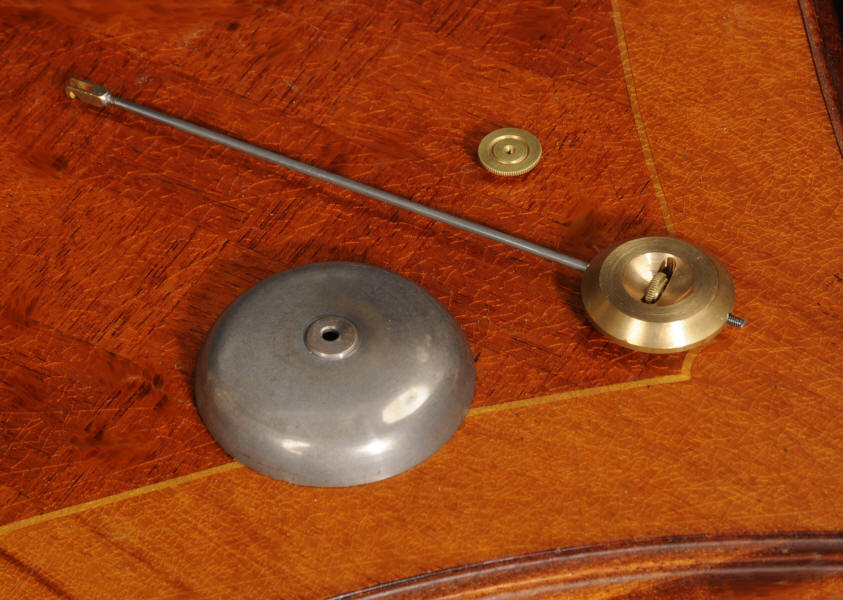
Complete with pendulum, bell and a suitable key. Full setting up instructions supplied if required.
About us - All of our clocks are original antiques, we source most of our clocks in France, Belgium, the Netherlands and the UK. We prefer to buy our clocks in original 'dirty' condition. We then clean the cases using a technique we have developed over many years. We employ two qualified clockmakers who overhaul the movements. Movements are thoroughly tested until we are satisfied that they will run trouble free. |
||||||||||||||||
|
Click the movie player below to see the this actual clock
run -
|
![[Credit and Debit Cards]](https://www.dragon-antiques.com/creditca.gif)
Customer satisfaction is always guaranteed at Dragon Antiques!
|
Please email me to order or enquire: Julie@Dragon-Antiques.com
|