|
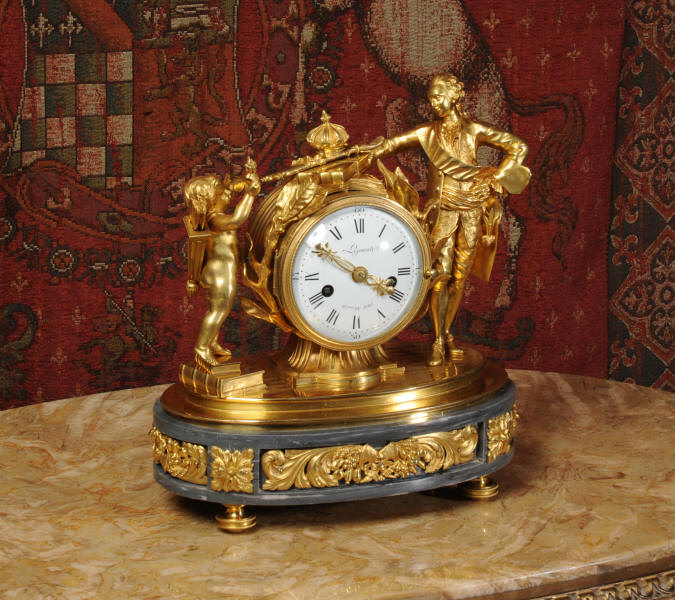
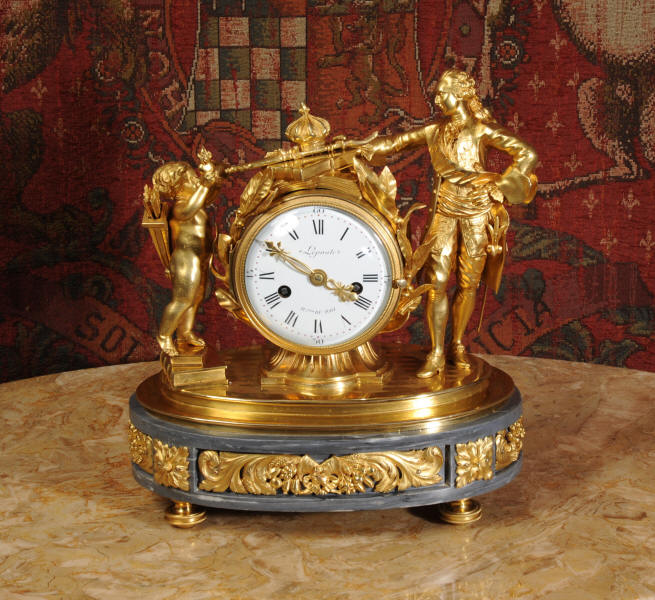
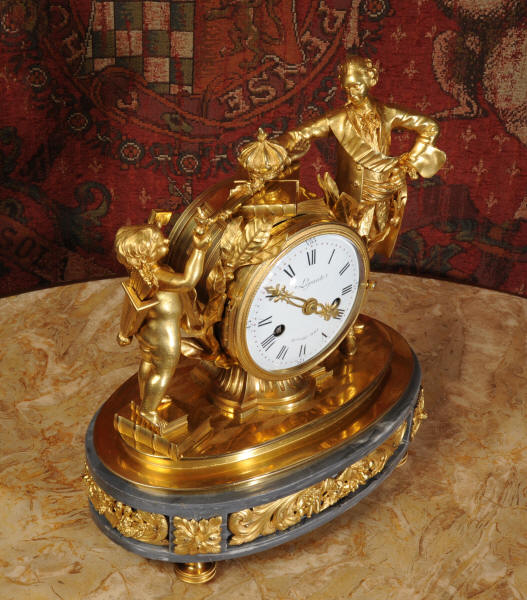
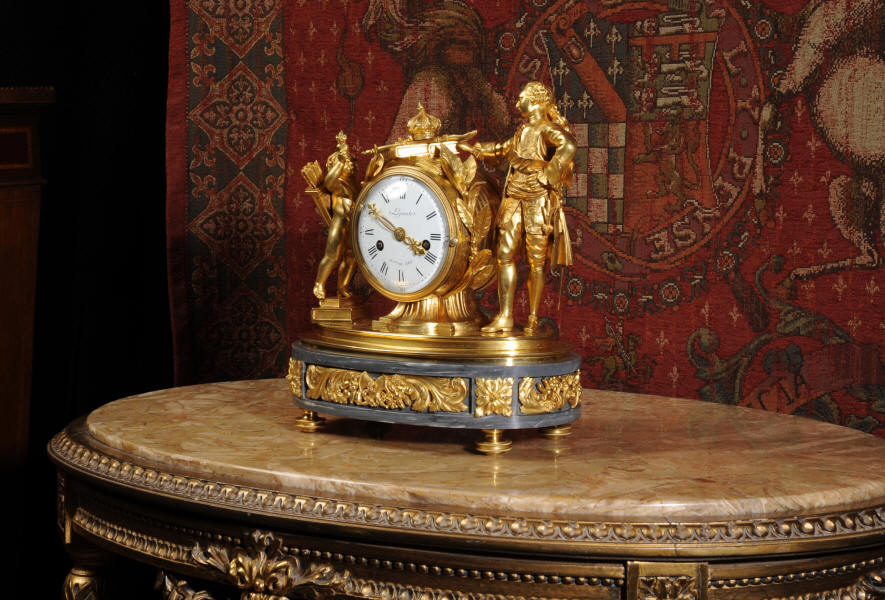
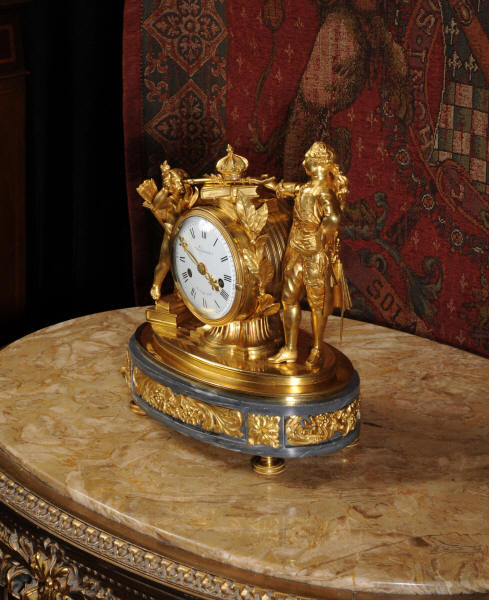
 Exquisite Early Clock,
Succession of Louis XVI, Jean-Baptiste LEPAUTE (1727-1802)
Exquisite Early Clock,
Succession of Louis XVI, Jean-Baptiste LEPAUTE (1727-1802)|
Buy
Now
Using our secure server ~~ or ~~ |
£12795 English Pounds Sterling Shipping within UK by dedicated courier £80
Shipping to USA / Europe £195 by air fully insured World wide shipping - £345 by air fully insured |
stock code: RSC2611 |
Clocks by Lepaute are in many major collections around the world including the Kunstgewerbemuseum in Berlin; Palacio Real in Madrid; Musée du Louvre, Musée national des techniques, and Nissim de Camondo in Paris; Château de Versailles; Musée des arts décoratifs, Lyon; New York Metropolitan Museum of Art; Hermitage Museum in St. Petersburg, The Wallace Collection, London and the John Paul Getty Museum, California
Originally from the eastern part of France, Jean-André Lepaute was the eldest of nine children. Introduced by his father to the art of casting, locksmithing, and monumental clockmaking, he left home at 20 to train with a Parisian clockmaker. His younger brother Jean-Baptiste joined him in 1747. Together they founded LEPAUTE HORLOGER DU ROI, established at rue Saint-Honoré in 1766, and then at Palais Royal in 1772-73. 9 Designated Horloger du roi, Jean-André Lepaute devised a clock, which he presented to Louis XV in 1751, whose entire mechanism consisted of only one wheel. In 1752 he invented a clock that indicated the hours, minutes and seconds, striking the hours and the quarters. The following year he published the essay Mémoire sur l’echapemens à repos, Donné à l’Académie des Sciences par Lepaute Horloger du Roi au Luxembourg à Paris, followed in 1755 by the remarkable horology treatise Traité d’horlogerie, on which he collaborated with the celebrated astronomer and academician Jérôme de Lalande (Fig.1). He completed his treatise work in 1760 with Description d’une nouvelle pendule policamératique ; pour servir de Supplément au Traité d’Horlogerie.
Appointed Maître, or master clockmaker, in 1759, Jean-André Lepaute received official accomodation at the Louvre. He retired from the firm in 1775. Fig.1 Traité d’horlogerie by Jean-André Lepaute His brother, Jean-Baptiste Lepaute, also appointed Horloger du Roi, took over the family enterprise in 1774 along with his two nephews. He became master clockmaker in 1776, creating among other works, the monumental equation clock for the Paris city hall (destroyed in 1871). From 1778 to 1783, his establishment was located at Rue des Echelles Saint-Honoré. He retired in 1789. The two Lepaute brothers were not only renowned for the technical feats and aesthetic value of their numerous horological inventions, but they were also the founding members of a great dynasty of clockmakers who distiguished themselves over the centuries for their excellence and prestige.
Reference: Tardy, Dictionnaire Des Horlogers Francais. European Clocks in the J. Paul Getty Museum By Gillian Wilson, David Harris Cohen, Jean Nérée Ronfort, Jean-Dominique Augarde, Peter Friess
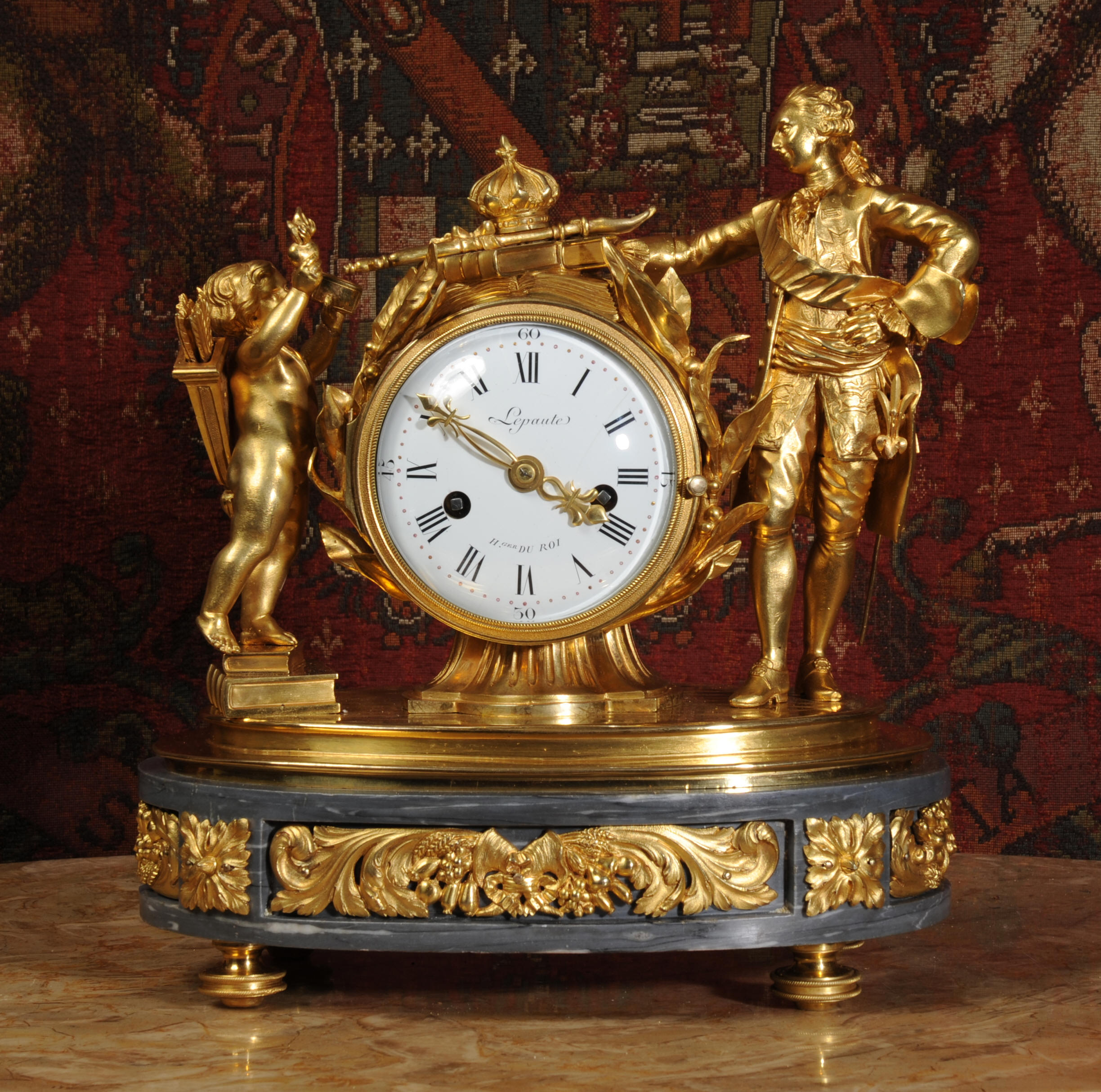
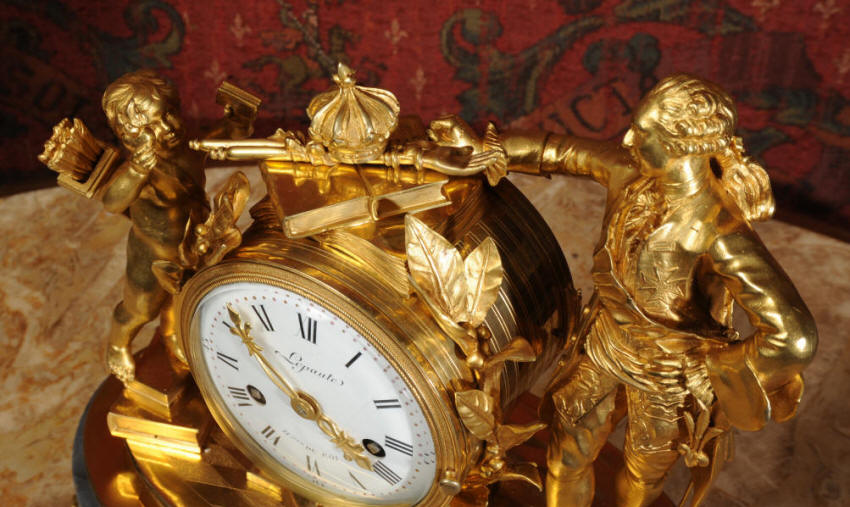
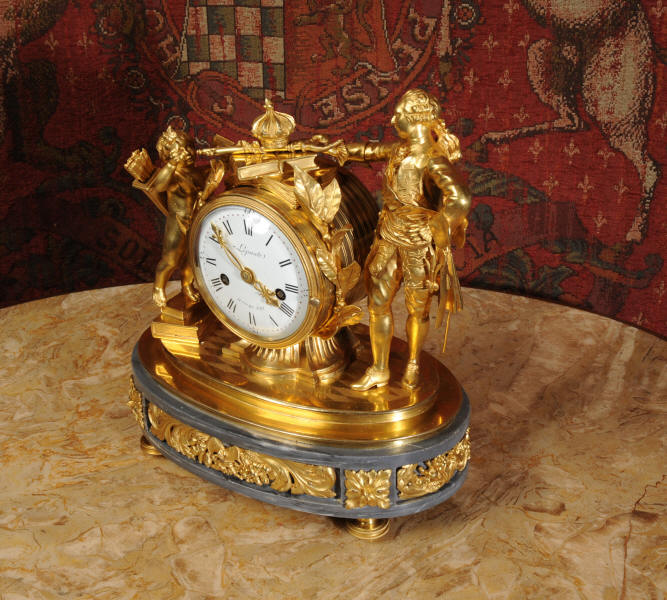
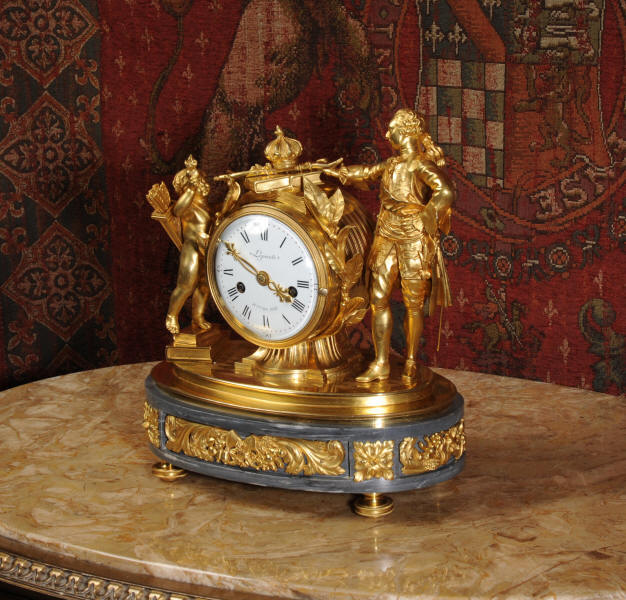
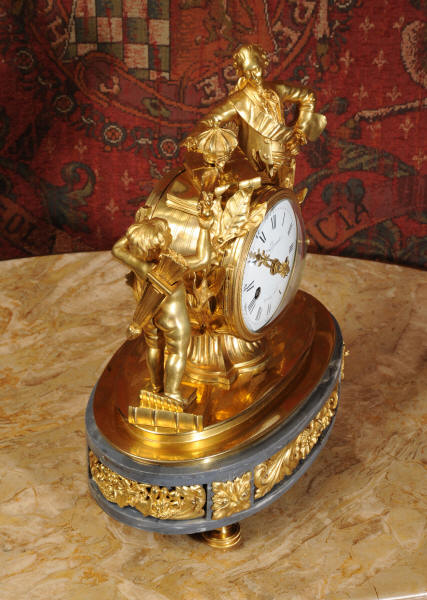
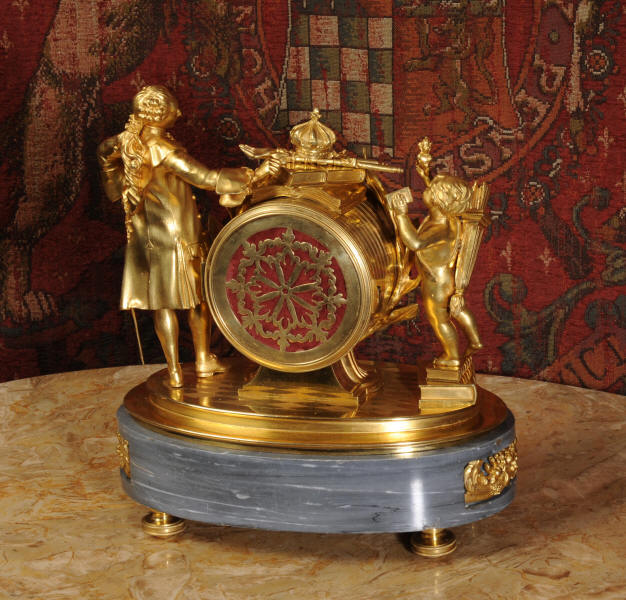
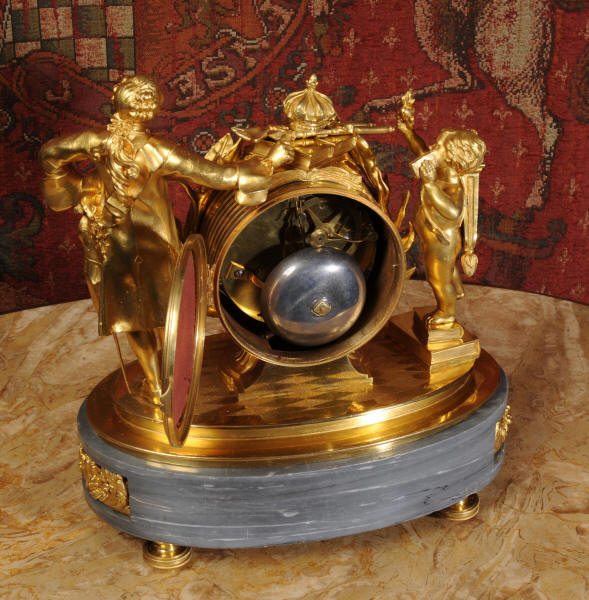
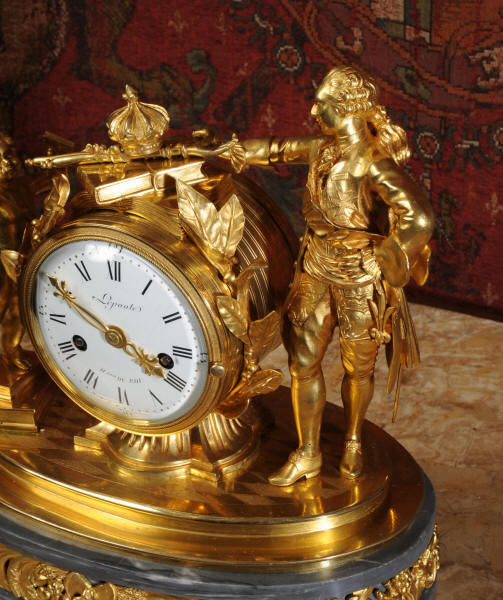
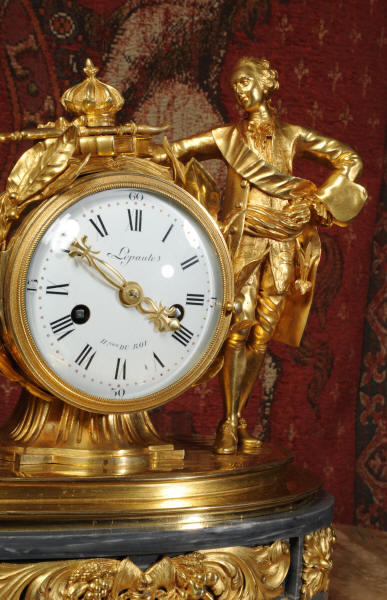
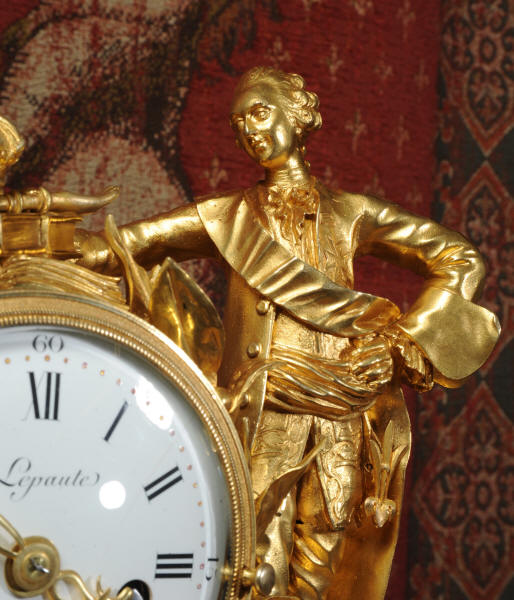
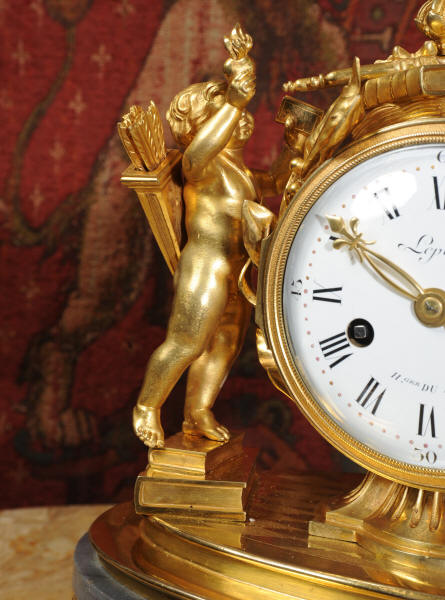
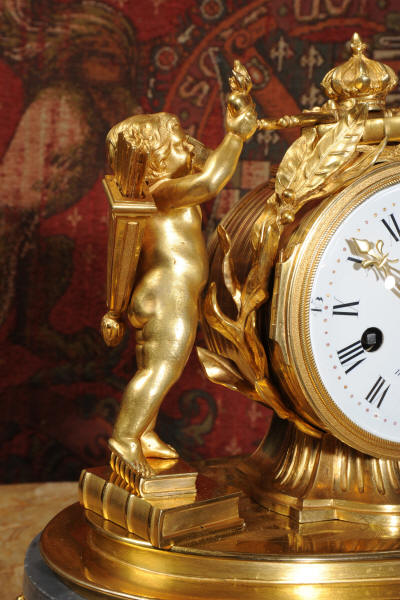
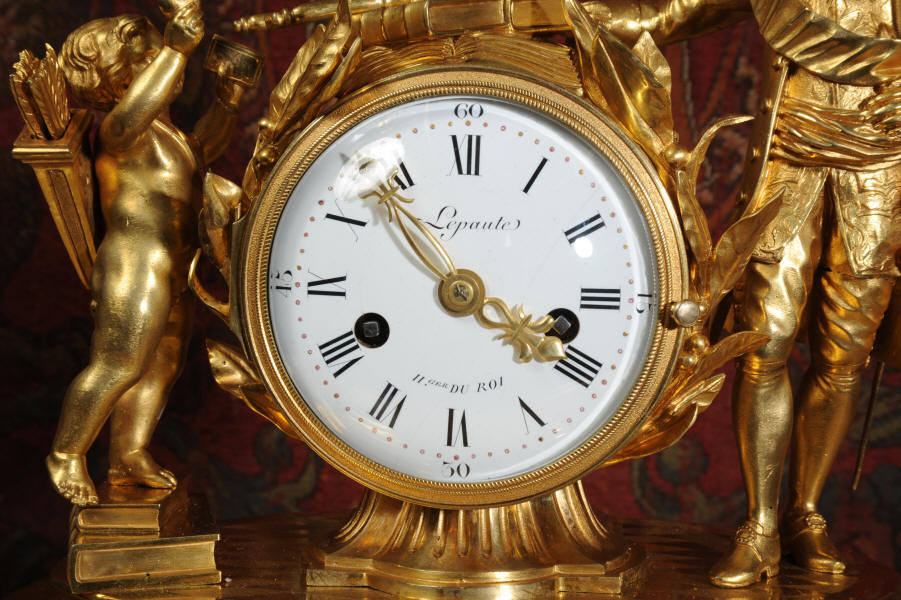
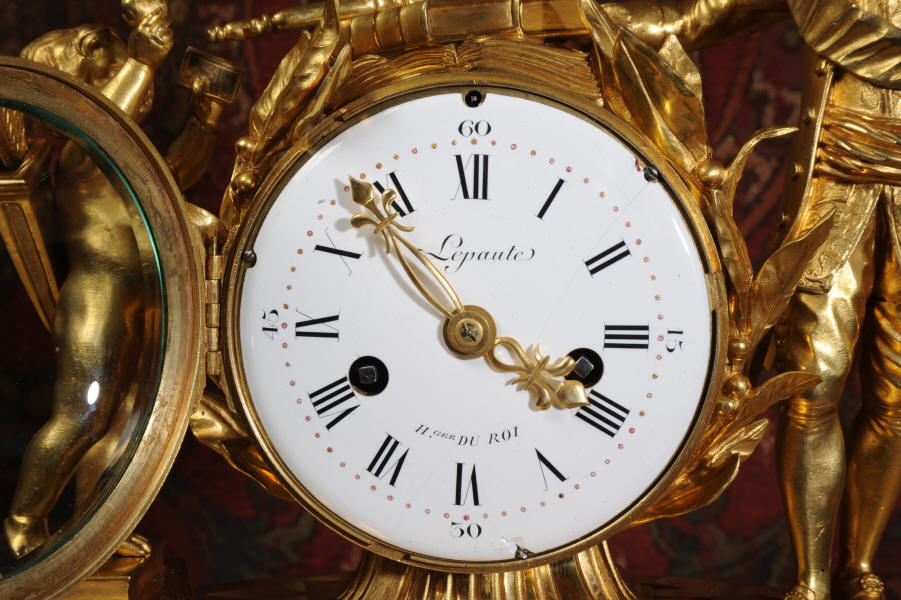
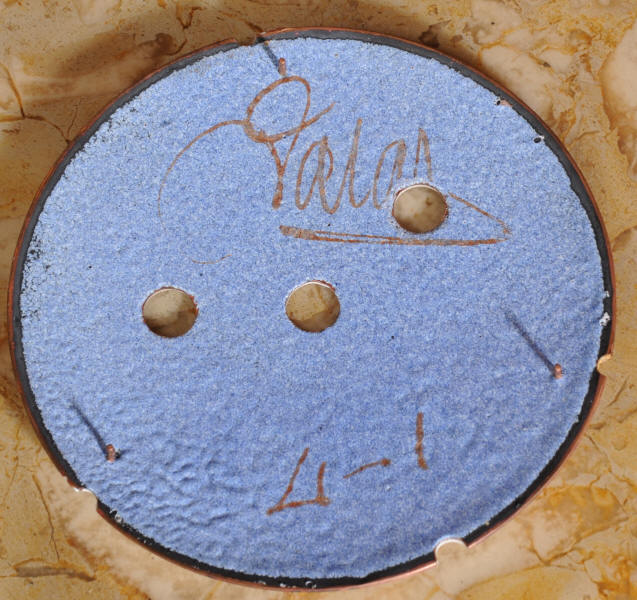
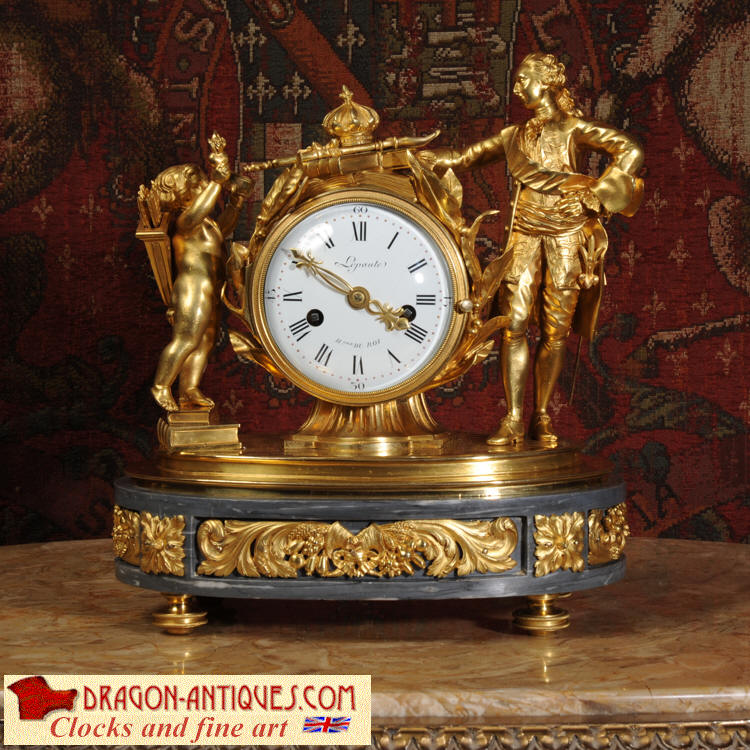
The superb enamel dial is signed for the clockmaker and covered by convex glass (glass possibly not original). The original hands are beautifully cut as Fleur de Lys (symbol of French Monarchy). The clock is modelled in the round with a beautifully fretted back door, backed with red velvet, you could display this very well in a centre of a room.
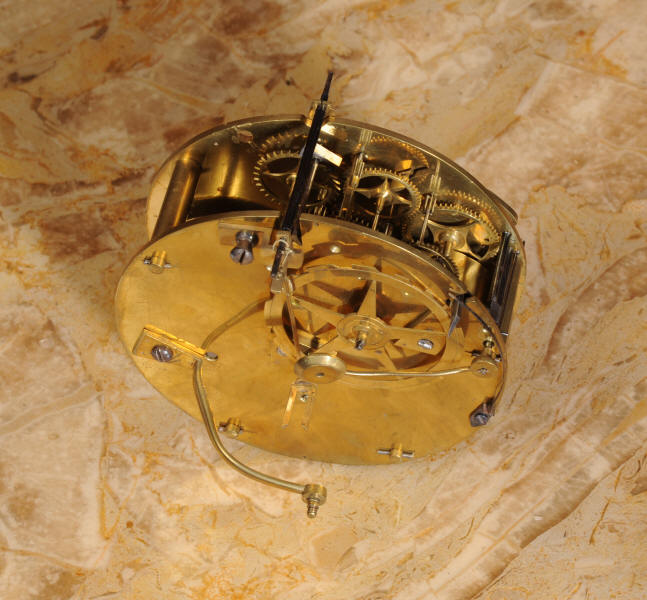
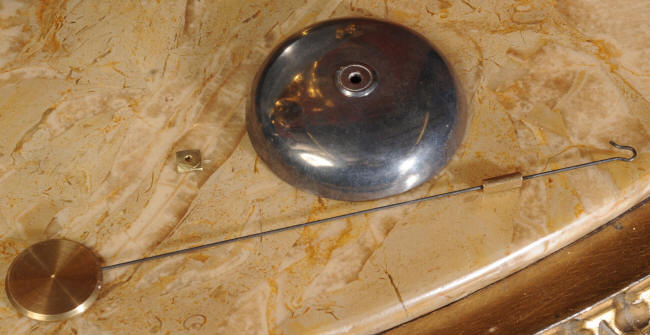
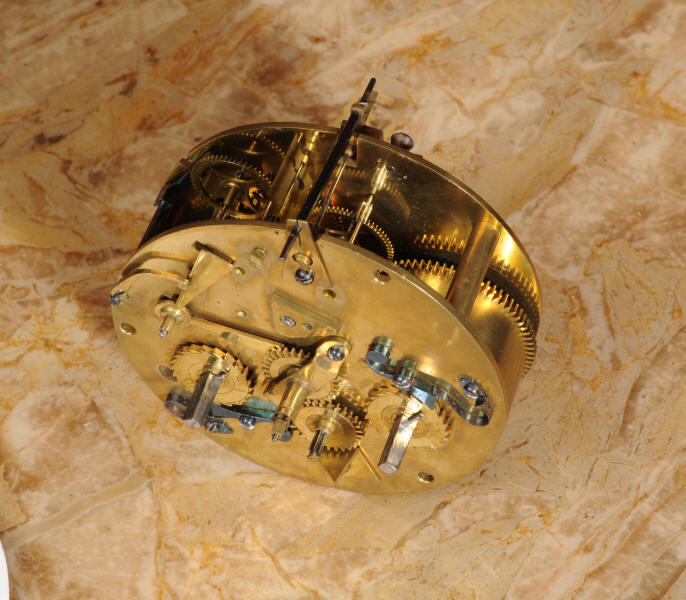
The French movement is of high quality and of course is beautifully hand made. It is in excellent clean and running condition. It has an anchor escapement and silk suspension. Pendulum is a replacement. It runs for 8 days and strikes the hours and halves on a bell. Click the video clip below to hear the bell and watch the clock running!
Condition of the case is
excellent, the original gilding is beautifully clean and bright with hardly any
wear or discolouration and there are no losses. The marble is also in good
condition with just some slight nibbles to the edges. The dial is in good
condition, there is a hairline across it and some chipping to the edge that
can't be seen with the bezel closed. We have replaced the velvet in the back
door. A beautiful and rare survivor to add to your collection!
Complete with pendulum, bell and a suitable key. Full setting up instructions supplied if required.
|
Dimensions of clock: |
inches |
Height 12 1/4", Width 11 1/2", Depth 7" |
|
centimetres |
Height 31 cm, Width 29.5 cm, Depth 18 cm |
About us - All of our clocks are original antiques, we source most of our clocks in France, Belgium, the Netherlands and the UK. We prefer to buy our clocks in original 'dirty' condition. We then clean the cases using a technique we have developed over many years. We employ two qualified clockmakers who overhaul the movements. Movements are thoroughly tested until we are satisfied that they will run trouble free.
Click the movie player below to see the this actual clock
run -
(large file, may take a moment to start).

![[Credit and Debit Cards]](http://www.dragonantiques2.co.uk/images/creditca.gif)